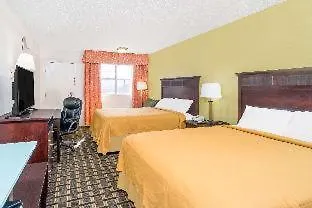
The Appalachian Mountains stretch over 2,000 miles from Alabama to Maine, crossing 14 states and offering travelers access to some of the most varied mountain scenery, trail systems, and historic sites in the eastern United States. Whether you're hiking a segment of the Appalachian Trail, visiting Great Smoky Mountains National Park, or exploring the Shenandoah Valley, choosing the right 2-star hotel along the route can make or break your trip. This guide compares 15 budget hotels positioned across key Appalachian gateways - from western Virginia and eastern Tennessee to upstate New York and the Pocono Mountains - helping you book smarter and travel better.
What It's Like Staying in the Appalachian Mountains
Staying in the Appalachian Mountains means trading urban density for rugged accessibility - most properties sit along interstate corridors like I-75, I-81, or US-19, placing guests within driving distance of trailheads, state parks, and scenic byways rather than walkable town centers. Car travel is essential in virtually every Appalachian gateway town; public transit is nonexistent between destinations, and attractions like Lookout Mountain, Whiteface Mountain, or the Blue Ridge Parkway require independent wheels. Seasonal crowd patterns are driven by foliage season in October and summer hiking peaks, while winter brings skiers to resorts like Wintergreen near Waynesboro, Virginia.
Budget travelers, road-trippers, and hikers benefit most from staying here, as 2-star properties along the corridor offer strong value compared to resort towns. Travelers seeking walkable nightlife or urban dining should note that most Appalachian gateway towns close early and require driving even for dinner.
Pros:
- Direct access to trailheads, state parks, and national forests without paying mountain resort premiums
- Free parking is standard at virtually all 2-star properties along the Appalachian corridor
- Strategically positioned along major interstates, making multi-stop road trips highly efficient
Cons:
- A car is non-negotiable - no rideshare coverage in most rural gateway towns
- Restaurant and grocery options near budget hotels are often limited to chains along highway exits
- Peak foliage season (mid-October) pushes occupancy to capacity with minimal last-minute availability
Why Choose 2-Star Hotels in the Appalachian Mountains
Two-star hotels in the Appalachian Mountains are purpose-built for travelers who spend the day outdoors and need a clean, practical base to return to - not a resort experience. Rates at 2-star properties along the corridor average around 40% less than branded mountain lodges or resort hotels in the same areas, with most properties offering complimentary breakfast, free parking, and WiFi that add genuine daily value for road-trippers. Room sizes in this category tend to be functional rather than spacious, typically featuring standard doubles or queens with microwaves and mini-fridges - useful for packing lunches before early trail starts.
The trade-off is predictable: noise from interstate proximity is common, amenity depth is limited, and on-site dining typically means a continental breakfast rather than a full restaurant. However, for hiking-focused and drive-through itineraries, these properties consistently outperform on value-per-night in a region where location matters far more than room size.
Pros:
- Complimentary breakfast included at most properties - a practical saving for early-departure hikers
- In-room microwaves and refrigerators allow meal prep, reducing daily food costs significantly
- Disability-accessible rooms widely available across the category in this region
Cons:
- Interstate-adjacent locations can generate road noise, particularly in lighter construction properties
- On-site amenities like pools are often seasonal, closed outside May-September
- Limited concierge or local knowledge at front desks - trail planning must be self-directed
Practical Booking & Area Strategy for the Appalachian Mountains
The Appalachian Mountain corridor spans multiple states, so your base location should align with your primary itinerary. For Tennessee-focused trips - covering Chattanooga, Lookout Mountain, Ruby Falls, and the Tennessee Aquarium - hotels in the Chattanooga metro or eastern Tennessee towns like Sweetwater and Kingsport position you within a short drive of the region's top draws. For the Virginia and Blue Ridge section, Staunton and Waynesboro sit within minutes of Skyline Drive, the Shenandoah Valley, and Wintergreen Resort, while Galax anchors the southwestern Virginia highlands near Stone Mountain State Park. Upstate New York and the Catskills - served by properties in Woodstock, Keene Valley, and Vestal - offer access to Adirondack trails and the Hudson Valley arts scene, with Binghamton University and Apalachin Marsh Bird Sanctuary both nearby. In Pennsylvania, the Pocono Lakes region and Johnstown provide entry points to Promised Land State Park and the Steamtown National Historic Site respectively.
Book at least 6 weeks ahead for October foliage season across all Appalachian states, when even budget hotels reach capacity quickly. The Chickamauga and Chattanooga National Military Park, Great Smoky Mountains National Park, and the Blue Ridge Parkway are the three highest-demand anchors - properties closest to these see the sharpest price spikes in summer and autumn. For budget maximization, target midweek stays and consider gateway towns one exit removed from the primary tourist hubs.
Best Value Stays
These properties offer the lowest entry price points along the Appalachian corridor, with essentials like free parking, WiFi, and breakfast included - suited to road-trippers and hikers who prioritize trail time over hotel amenities.
-
1. Knights Inn Chattanooga
Show on map


 Check-infrom 15:00 until 23:59Check-outuntil 11:00
Best price guarantee
fromUS$ 63
-
2. Mountain Inn Dayton
Show on map


 Check-infrom 14:00 until 23:59Check-outuntil 11:00
Hurry – almost gone at this price!
fromUS$ 65
-
3. Knights Inn Galax
Show on map


 Check-infrom 14:00 until 23:59Check-outuntil 11:00
Best price guarantee
fromUS$ 33
-
4. Rodeway Inn Sweetwater South
Show on map


 Check-infrom 14:00 until 23:59Check-outuntil 11:00
Best price guarantee
fromUS$ 67
-
5. Quality Inn Johnstown
Show on map


 Check-infrom 15:00 until 23:59Check-outuntil 11:00
Best price guarantee
fromUS$ 74
Best Mid-Range Picks
These properties add meaningful amenities - indoor or outdoor pools, fitness centers, included hot breakfast, or suite-style rooms - at rates that remain well below mountain resort pricing, suited to travelers who want more than a bare overnight stop.
-
6. Country Inn & Suites By Radisson, Dalton, Ga
Show on map


 Check-infrom 15:00 until 23:59Check-outuntil 11:00
Rooms filling fast – secure the best rate!
fromUS$ 91
-
7. Quality Inn Calhoun North I-75
Show on map


 Check-infrom 14:00 until 23:59Check-outuntil 11:00
Best price guarantee
fromUS$ 99
-
8. Comfort Inn Pocono Lakes Region
Show on map


 Check-infrom 16:00 until 23:59Check-outuntil 11:00
Best price guarantee
fromUS$ 101
-
9. Quality Inn Waynesboro - Skyline Drive
Show on map


 Check-infrom 15:00 until 23:59Check-outuntil 11:00
Hurry – almost gone at this price!
fromUS$ 88
-
10. Comfort Inn Kingsport Southeast
Show on map


 Check-infrom 15:00 until 23:59Check-outuntil 11:00
Best price guarantee
fromUS$ 209
-
11. Clarion Pointe Staunton East
Show on map


 Check-infrom 15:00 until 23:59Check-outuntil 11:00
Rooms filling fast – secure the best rate!
fromUS$ 53
Best Premium Options
These properties offer the strongest amenity profiles in the 2-star Appalachian category - distinctive settings, above-average inclusions, or specific location advantages that justify slightly higher rates compared to the corridor standard.
-
12. Keene Valley Lodge
Show on map


 Check-infrom 15:00 until 22:00Check-outfrom 08:00 until 11:00
Just a few rooms left at the best rate!
fromUS$ 189
-
13. The Herwood Inn
Show on map


 Check-infrom 15:00 until 23:59Check-outuntil 11:00
Just a few rooms left at the best rate!
fromUS$ 273
-
14. Candlewood Suites Vestal - Binghamton By Ihg
Show on map


 Check-infrom 15:00 until 23:59Check-outuntil 12:00
Hurry – almost gone at this price!
fromUS$ 85
-
15. Moxy Asheville Downtown
Show on map


 Check-infrom 16:00 until 23:59Check-outuntil 12:00
Just a few rooms left at the best rate!
fromUS$ 175
Smart Travel & Timing Advice for the Appalachian Mountains
The Appalachian Mountains follow a sharp seasonal demand curve that directly affects 2-star hotel pricing and availability. Peak foliage season runs from early to late October, when leaf color across the Blue Ridge, Smokies, and Adirondacks drives occupancy to near-capacity at even the most basic properties - prices at mid-range hotels in gateway towns like Asheville, Staunton, and Keene Valley can spike sharply during this window. Summer (June through August) is the second busiest period, driven by hiking, camping, and national park visits, particularly around Great Smoky Mountains National Park and the Shenandoah. Spring (April-May) offers the best balance of comfortable temperatures, lower rates, and trail accessibility once snow has cleared at elevation.
Winter travel works well for ski-focused itineraries - Wintergreen near Waynesboro and Whiteface Mountain near Keene Valley operate through March - but many seasonal amenities like outdoor pools and some smaller B&Bs reduce hours or close entirely. Book at least 6 weeks ahead for any October weekend along the entire Appalachian corridor. A stay of 3 nights is the practical minimum to justify driving between gateway towns; 5-7 nights suits travelers planning multi-state Appalachian segments. Last-minute booking works well in February and early March when demand drops across most corridor states.